· 3 min read
Pamukkale Travel Guide: One-Day Itinerary and What to See
Pamukkale travertines, Hierapolis, the Antique Pool, Laodicea and the Karahayıt Red Spring: a one-day itinerary, best times to visit and practical tips.
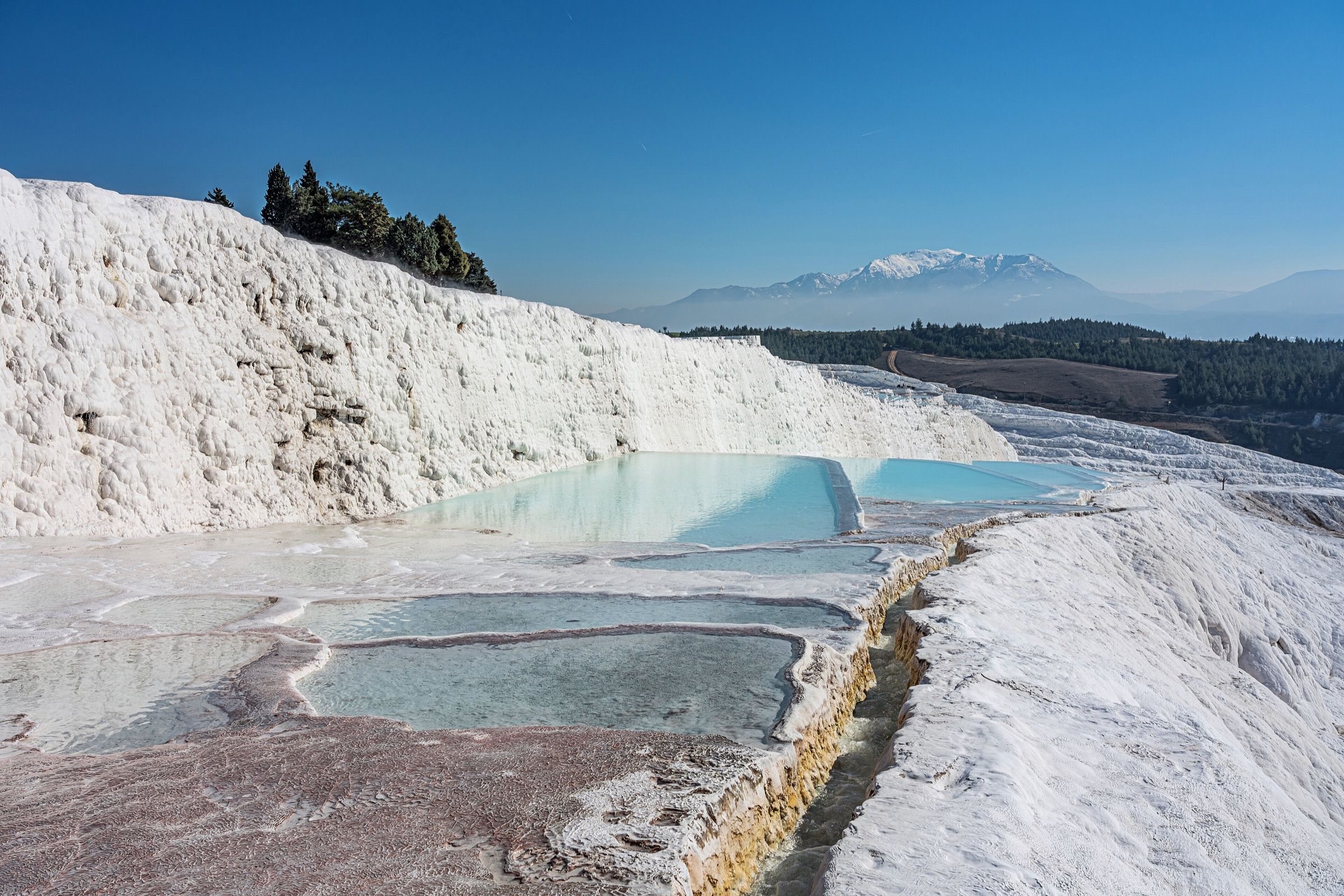
Together with the ancient city of Hierapolis, Pamukkale has been on the UNESCO World Heritage List since 1988. Its white travertine terraces, formed over thousands of years by calcium-rich thermal water, Roman ruins and healing springs make it one of Türkiye’s most special destinations. If you stay in Karahayıt, every highlight is just minutes away. Here is our suggested one-day route.
Itinerary at a glance
| Time | Stop | Duration |
|---|---|---|
| 08:00 | Pamukkale travertines | 1.5–2 hours |
| 10:00 | Hierapolis | 2 hours |
| 12:00 | Antique Pool and Archaeology Museum | 1.5 hours |
| 15:00 | Laodicea | 1.5 hours |
| 17:30 | Karahayıt Red Spring and sunset | 1 hour |
1. Morning: the Pamukkale travertines
Start early, when it is less crowded and the light on the white terraces is soft. To protect them, shoes are not allowed on the travertines, so be ready to walk barefoot and bring a small bag for your shoes. The surface can be slippery or rough in places, so take your time.
Walking up from the lower entrance (Pamukkale village side) gives the best views of the terraces and takes about 30–45 minutes.
2. Hierapolis
Right above the travertines, Hierapolis was one of the great spa towns of the Roman era. Don’t miss:
- The theatre: built into the hillside, with richly carved reliefs on its stage building.
- The necropolis: one of the largest ancient cemeteries in Anatolia, with hundreds of sarcophagi and tombs.
- Domitian Gate and Frontinus Street: the city’s monumental entrance.
The site is large with little shade, so bring comfortable shoes, a hat and water.
3. The Antique Pool and the museum
Swimming among ancient column fragments in the Antique Pool inside Hierapolis is one of the region’s most memorable experiences. It is also known as Cleopatra’s Pool. A separate fee applies, so bring a swimsuit and towel.
Next door, the Hierapolis Archaeology Museum, housed in the ancient baths, displays statues, sarcophagi and reliefs from the city. A cool stop in the midday heat.
4. Afternoon: Laodicea
About 20 minutes from Karahayıt, Laodicea is one of the largest ancient cities in Anatolia and was home to one of the Seven Churches of the Book of Revelation. Colonnaded streets, two theatres and ongoing excavations can be explored in a much quieter setting than Pamukkale.
5. Evening: the Karahayıt Red Spring
End the day at the Karahayıt Red Spring, where iron minerals colour the travertines red. Curious where the colour comes from? Read our article on the Red Spring. For dinner, the Gözlütepe trout restaurants in Oğuzlar are a good choice.
When to visit
- Spring (April–May) and autumn (September–October): mild weather and fewer crowds; the best time to explore.
- Summer: the sun reflects strongly off the white terraces, so visit early morning and late afternoon.
- Winter: the quietest season, with steam rising from the warm water in the cold air.
What to bring
- Sunscreen, a hat and sunglasses
- A small bag or backpack for your shoes
- Swimsuit and towel (for the Antique Pool)
- Plenty of water
Practical tips
- Check current opening hours and ticket prices from official sources, as they change by season.
- The travertines and Hierapolis share one ticket; the Antique Pool and Laodicea charge separately.
- At sunset the travertines turn pink and orange, one of the best times for photos.
Where to stay
Karahayıt offers a quieter setting and thermal waters right next to Pamukkale. After a day of sightseeing, relax in your thermal-water bathtub or our pools. Explore our rooms, check availability or see more ideas on our things to do page.